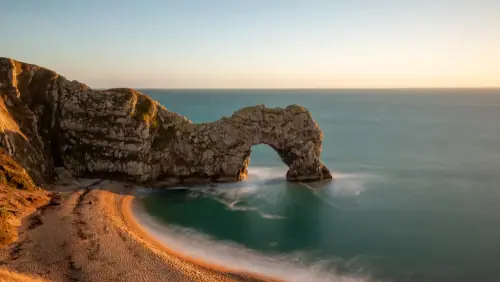
Jurassic Coast
Exmouth > Sidmouth > Lyme Regis > West Bay > Weymouth > Lulworth Cove > Swanage
Discover England's Jurassic Coast on a scenic journey through East Devon and Dorset, exploring dramatic cliffs, historic harbours, traditional seaside towns and some of the country's most distinctive coastal landscapes.
Explore the Jurassic Coast in a Motorhome
Stretching approximately 95 miles from Exmouth in East Devon to Studland Bay in Dorset, the Jurassic Coast is one of England's most remarkable coastal landscapes. Recognised as a UNESCO World Heritage Site for its geological significance, the coastline reveals millions of years of Earth's history through dramatic cliffs, distinctive rock formations and fossil-rich beaches.
Discover traditional fishing villages, historic harbours and picturesque seaside towns as you travel through East Devon and Dorset. From the fossil-hunting beaches of Lyme Regis and Charmouth to the sweeping shoreline of Chesil Beach and the limestone arch of Durdle Door, the region offers a varied combination of natural heritage and coastal scenery.
Our five-day Jurassic Coast itinerary guides you from Exmouth to Swanage, connecting some of the coastline's most recognisable destinations. With carefully selected stops and practical advice for motorhome travel, the route provides a structured way to explore this distinctive part of southwest England at your own pace.
Suggested driving route. Mapbox driving directions do not account for motorhome dimensions; check road restrictions before travelling.
Your Jurassic Coast Itinerary
Day 1: Exmouth to Sidmouth - Discovering the East Devon Coast
Begin your Jurassic Coast journey in Exmouth, where the River Exe meets the English Channel and the UNESCO World Heritage coastline begins. Your first day introduces the distinctive landscapes of East Devon, combining traditional seaside towns, red sandstone cliffs and peaceful coastal scenery.
Spend the morning exploring Exmouth, known for its extensive sandy beach, attractive seafront and views across the Exe Estuary. Enjoy a walk along the promenade or discover the town's independent shops and cafés before continuing east towards Budleigh Salterton.
Situated beside a sweeping pebble beach, Budleigh Salterton is a traditional coastal town surrounded by distinctive red cliffs. Continue towards Sidmouth, passing through the East Devon countryside before arriving at an elegant Regency seaside town framed by dramatic sandstone headlands.
Highlights along the way:
- Exmouth Beach - Enjoy an expansive sandy shoreline, traditional seafront and views across the mouth of the River Exe.
- Orcombe Point - Discover the western gateway to the Jurassic Coast World Heritage Site, marked by the distinctive Geoneedle sculpture.
- Budleigh Salterton - Explore a traditional seaside town with independent shops, a picturesque pebble beach and striking red sandstone cliffs.
- Otter Estuary - Discover a protected coastal landscape with walking trails, wetlands and opportunities for birdwatching.
- Sidmouth - Wander along the Regency seafront, enjoy the traditional town centre and admire the surrounding red cliffs.
- Connaught Gardens - Visit landscaped gardens overlooking Sidmouth's coastline, with elevated views across the sea and surrounding cliffs.
Suggested overnight stop:
Choose an established campsite in or around Sidmouth or the surrounding East Devon countryside. Staying locally provides an opportunity to explore the seafront and town centre before continuing east towards Lyme Regis the following morning.
Motorhome travel advice:
The roads connecting Exmouth, Budleigh Salterton and Sidmouth include sections of rural countryside with bends and narrower approaches to coastal settlements. Use suitable main routes where possible and check designated motorhome parking before entering busy town centres. Coastal car parks can become particularly busy during summer weekends and school holidays.
Day 2: Sidmouth to Lyme Regis - Fishing Villages & Fossil Coastlines
Continue east from Sidmouth towards the traditional fishing village of Beer, where white limestone cliffs and a sheltered pebble beach create one of East Devon's most distinctive coastal settings. This section of the Jurassic Coast combines maritime heritage, dramatic geological formations and historic seaside communities.
Spend time exploring Beer, known for its colourful fishing boats, independent cafés and working beach. Nearby, the Beer Quarry Caves offer an opportunity to discover the region's centuries-old stone quarrying history through guided tours. Continue towards Seaton, a coastal town overlooking Lyme Bay, with a long pebble beach and access to the surrounding countryside.
Cross into Dorset and arrive at Lyme Regis, one of the Jurassic Coast's best-known destinations. Famous for its fossil discoveries, historic harbour and connections to pioneering palaeontologist Mary Anning, the town offers an engaging combination of natural history, traditional architecture and coastal scenery. Finish the day exploring the harbour and the famous Cobb before settling in for the evening.
Highlights along the way:
- Beer Beach - Discover a sheltered fishing beach surrounded by striking white limestone cliffs and traditional fishing boats.
- Beer Quarry Caves - Explore historic underground quarries that supplied building stone for important buildings across England. Check tour availability before visiting.
- Seaton - Enjoy the seafront, expansive views across Lyme Bay and the town's traditional coastal atmosphere.
- Seaton Tramway - Take a heritage tram journey through the Axe Valley wetlands towards Colyton.
- Lyme Regis Museum - Learn about the area's geological heritage, fossil discoveries and the life of Mary Anning.
- The Cobb - Walk along Lyme Regis's historic harbour wall and enjoy views across the town and Lyme Bay.
Suggested overnight stop:
Choose an established campsite in or around Lyme Regis, Uplyme or the surrounding Dorset countryside. Staying nearby allows time to enjoy the harbour, restaurants and coastal walks before continuing towards Charmouth and West Bay the following day.
Motorhome travel advice:
The approaches to Beer and Lyme Regis include steep gradients, narrow streets and sections with limited parking. Use designated parking suitable for your vehicle and consider exploring historic town centres on foot. Fossil hunting should only take place in suitable areas, with particular care around unstable cliffs and changing tides.
Day 3: Lyme Regis to West Bay - Fossil Beaches & Golden Cliffs
Leave Lyme Regis and continue east along the Dorset coastline towards Charmouth, one of the Jurassic Coast's most significant fossil-hunting destinations. This section of the journey reveals dramatic cliffs, ancient geological formations and sweeping views across Lyme Bay.
Begin with a visit to Charmouth Beach, where fossils dating back millions of years can be discovered among the loose material washed onto the shore. The nearby Charmouth Heritage Coast Centre provides an introduction to the area's geology, marine fossils and natural history. Continue through the countryside towards the Golden Cap coastline, home to the highest point on England's south coast.
Finish the day in West Bay, a traditional harbour village near Bridport, recognised for its towering golden sandstone cliffs and picturesque waterfront. Explore the harbour, enjoy a walk along the seafront or visit nearby Bridport for independent shops, cafés and restaurants.
Highlights along the way:
- Charmouth Beach - Explore one of the Jurassic Coast's best-known fossil beaches, where geological discoveries continue to reveal the region's prehistoric past.
- Charmouth Heritage Coast Centre - Discover local fossils, geological displays and practical guidance on responsible fossil hunting.
- Golden Cap - Admire the coastline around the highest point on England's south coast, with walking routes offering extensive views across Lyme Bay.
- Seatown - Visit a small coastal settlement beneath Golden Cap, with a shingle beach and access to surrounding coastal walking routes.
- West Bay Harbour - Explore a traditional working harbour surrounded by waterfront cafés, fishing boats and coastal scenery.
- East Cliff, West Bay - View the distinctive golden sandstone cliffs that make West Bay one of Dorset's most recognisable coastal destinations.
Suggested overnight stop:
Choose an established campsite in or around West Bay, Bridport or the surrounding Dorset countryside. This provides a convenient base for exploring the harbour and nearby coastline before continuing east towards Abbotsbury, Portland and Weymouth.
Motorhome travel advice:
Use the A35 and suitable connecting roads when travelling between coastal destinations, rather than relying on the narrowest rural lanes. Golden Cap is best explored on foot from an appropriate parking location. When visiting fossil beaches, remain clear of unstable cliff faces and check tide times before walking along the shoreline. Parking restrictions and vehicle-size limits should be checked at individual coastal car parks.
Day 4: West Bay to Weymouth - Chesil Beach & the Isle of Portland
Continue east from West Bay towards Abbotsbury, travelling through the rolling Dorset countryside and discovering one of the Jurassic Coast's most distinctive landscapes. Today's journey follows the remarkable shoreline of Chesil Beach before exploring the rugged limestone scenery of the Isle of Portland and finishing in Weymouth.
Begin with a visit to Abbotsbury, a picturesque village known for its traditional stone cottages, historic buildings and surrounding countryside. Nearby, Abbotsbury Swannery offers an opportunity to observe a managed colony of nesting mute swans, while the subtropical gardens provide a peaceful setting for a walk. Continue towards Chesil Beach, an extraordinary shingle barrier stretching approximately 18 miles along the Dorset coast.
Travel onwards to the Isle of Portland, connected to the mainland by a causeway, where dramatic limestone cliffs, maritime heritage and panoramic coastal views define the landscape. Explore Portland Bill and its distinctive lighthouse before returning north to Weymouth, a traditional seaside town with a sandy beach, historic harbour and attractive waterfront.
Highlights along the way:
- Abbotsbury Village - Explore a traditional Dorset village with historic stone buildings, independent shops and attractive countryside surroundings.
- Abbotsbury Swannery - Visit a renowned colony of nesting mute swans in a sheltered setting beside the Fleet Lagoon. Check seasonal opening arrangements before visiting.
- Abbotsbury Subtropical Gardens - Discover established gardens featuring exotic plants, woodland paths and sheltered coastal scenery.
- Chesil Beach - Admire an extensive natural shingle barrier separating the Fleet Lagoon from the English Channel.
- Portland Bill Lighthouse - Visit one of Dorset's most recognisable maritime landmarks, overlooking the exposed southern tip of Portland.
- Weymouth Harbour - Explore a colourful working harbour surrounded by historic buildings, independent restaurants and traditional fishing boats.
- Weymouth Beach - Enjoy the town's sweeping sandy shoreline, traditional promenade and views across Weymouth Bay.
Suggested overnight stop:
Choose an established campsite in or around Weymouth, Preston or the surrounding Dorset countryside. Staying close to Weymouth provides an opportunity to explore the harbour and seafront before continuing towards Durdle Door, Lulworth Cove and the Isle of Purbeck the following morning.
Motorhome travel advice:
The B3157 coast road offers attractive views between West Bay and Abbotsbury, although sections are winding and exposed. Check conditions and vehicle suitability before travelling. Portland is accessible via the main road from Weymouth, but some smaller roads near the coastline are narrow or steep. Use designated parking for Portland Bill and Weymouth, and allow additional time during busy summer periods.
Day 5: Weymouth to Swanage - Durdle Door, Lulworth Cove & the Isle of Purbeck
Conclude your Jurassic Coast journey by travelling east from Weymouth towards some of Dorset's most recognisable natural landmarks. Today's route explores the limestone coastline around Durdle Door and Lulworth Cove before continuing through the historic Isle of Purbeck towards Swanage.
Begin with a visit to Durdle Door, a natural limestone arch rising from the sea beneath dramatic coastal cliffs. Accessible on foot from designated parking areas, the landmark offers one of the Jurassic Coast's most distinctive views. Continue to nearby Lulworth Cove, where a sheltered, horseshoe-shaped bay provides an excellent opportunity to appreciate the geological processes that have shaped this remarkable coastline.
Travel inland towards Corfe Castle, a historic village dominated by the ruins of a medieval castle overlooking the Purbeck countryside. Explore the village's traditional stone buildings and surrounding landscape before completing your journey in Swanage, a Victorian seaside town with a sandy beach, historic pier and attractive coastal setting.
Highlights along the way:
- Durdle Door - Discover the iconic natural limestone arch and enjoy sweeping views across the Jurassic Coast from the surrounding coastal paths.
- Man O'War Beach - Admire a sheltered cove situated beside Durdle Door, surrounded by distinctive limestone formations.
- Lulworth Cove - Explore a naturally formed horseshoe-shaped bay, recognised for its clear waters and exceptional geological features.
- Lulworth Crumple - Observe striking folded rock formations that reveal the powerful geological forces responsible for shaping the coastline.
- Corfe Castle - Visit the ruins of a medieval fortress overlooking a traditional Dorset village and the surrounding Purbeck countryside.
- Swanage Beach - Enjoy a sheltered sandy bay, traditional promenade and views towards the chalk cliffs of Ballard Down.
- Swanage Pier - Explore a historic Victorian pier offering views across Swanage Bay and the surrounding coastline.
Suggested overnight stop:
Choose an established campsite in or around Swanage, Corfe Castle or the surrounding Isle of Purbeck. Alternatively, travellers returning towards Hampshire, the New Forest or Christchurch can continue west via suitable main roads, allowing sufficient time to meet their agreed Return arrangements.
Motorhome travel advice:
Access to Durdle Door and Lulworth Cove requires careful planning, particularly during peak season. Use designated parking areas that permit your vehicle's dimensions and allow time to explore the landmarks on foot. The walk to Durdle Door includes steep sections and uneven ground. When travelling towards Corfe Castle and Swanage, favour established main routes and check local restrictions before entering smaller coastal roads. Coastal paths and cliff edges should be approached with care, particularly in wet or windy conditions.
Jurassic Coast Planning Guide - Essential Information for Motorhome Travel
Exploring the Jurassic Coast by motorhome offers the freedom to discover East Devon and Dorset at your own pace. With historic seaside towns, protected coastal landscapes and popular natural landmarks along the route, a little advance planning will help you make the most of your journey.
Best time to visit:
The Jurassic Coast can be explored throughout the year, although May, June and September often provide a particularly good balance of daylight, milder weather and fewer visitors than the busiest summer weeks. July and August are popular for beach visits and coastal activities, but campsites, attractions and car parks can become considerably busier. Autumn and winter offer quieter coastal scenery, with shorter daylight hours and more variable weather conditions.
Motorhome parking and coastal access:
Many of the Jurassic Coast's most recognisable destinations are situated near narrow coastal roads, historic town centres or protected landscapes. Parking arrangements vary considerably between locations, and not every public car park accommodates larger motorhomes.
- Plan parking in advance - Check vehicle-length, height and weight restrictions before arriving at popular destinations.
- Use designated parking - Follow local signage and avoid parking in restricted areas or obstructing narrow roads.
- Explore on foot - Coastal landmarks such as Durdle Door, Golden Cap and Lulworth Cove are best appreciated using established walking routes.
- Allow extra time - Popular destinations can experience congestion during weekends, bank holidays and school holidays.
Campsites and overnight stays:
Established campsites can be found throughout East Devon, West Dorset, Weymouth and the Isle of Purbeck. Choosing overnight accommodation close to each day's final destination helps reduce unnecessary driving and provides more time to explore the surrounding area.
Book ahead during peak periods, particularly around Lyme Regis, Weymouth and Swanage. Check campsite facilities, vehicle-size limits, arrival arrangements and availability before travelling. Overnight parking in public car parks should never be assumed to permit camping or sleeping in a motorhome.
Driving the Jurassic Coast:
The itinerary combines established main roads with shorter journeys into coastal villages and seaside towns. The A35, A3052 and A352 provide useful connections across parts of the region, while smaller coastal roads may include steep gradients, sharp bends and narrow sections.
- Check vehicle suitability - Confirm road restrictions and available turning space before following navigation instructions.
- Allow realistic journey times - Short distances can take longer on rural roads and during busy holiday periods.
- Consider alternative parking - Where town-centre access is restricted, use suitable parking outside the centre and continue on foot or by public transport.
- Monitor local conditions - Roadworks, temporary closures and seasonal congestion can affect coastal journeys.
Coastal safety and fossil hunting:
The Jurassic Coast is internationally recognised for its geological importance, but its cliffs are naturally unstable and rockfalls can occur without warning. Always remain clear of cliff bases, respect warning signs and avoid walking beneath overhanging rock.
Check tide times before visiting beaches, particularly around Charmouth, Lyme Regis and other locations where rising water can restrict access. Fossil hunting is best undertaken with guidance from local visitor centres or organised fossil walks, and visitors should follow the Jurassic Coast's responsible collecting guidance.
What to bring:
- Comfortable walking footwear - Suitable for coastal paths, uneven ground and countryside trails.
- Waterproof clothing - Coastal weather can change quickly, even during summer.
- Daypack and drinking water - Useful when exploring beaches and landmarks away from your motorhome.
- Offline maps - Helpful where mobile reception is limited.
- Beach and walking essentials - Including sun protection, suitable clothing and a reusable water bottle.
Starting and finishing your journey:
This five-day itinerary begins in Exmouth, Devon, and finishes in Swanage, Dorset. Travellers collecting a motorhome from roadtrippin365 in Christchurch, Dorset, should allow additional time to reach Exmouth before beginning the coastal route.
The itinerary's five sightseeing days do not include the journey from the depot to Exmouth or any additional time required to return the vehicle. Plan your hire dates around the fixed 14:00 Pickup and 10:30 Return times, allowing sufficient time to travel safely and comfortably.
Travel responsibly:
The Jurassic Coast is a protected World Heritage Site with sensitive habitats, historic communities and landscapes of international importance. Stay on designated paths, dispose of waste responsibly, respect local residents and follow the Countryside Code throughout your journey.
Explore the Jurassic Coast - With roadtrippin365
Discover the Jurassic Coast with roadtrippin365, your trusted motorhome and campervan hire company based in Christchurch, Dorset. Ideally positioned between the New Forest and the Dorset coastline, our depot provides a convenient starting point for exploring the South West of England.
Whether you're discovering the fossil-rich beaches of Lyme Regis, exploring the natural landmarks of Lulworth Cove or enjoying the traditional seaside towns of East Devon, our modern motorhomes and campervans provide a comfortable and practical way to experience the journey.
Why choose roadtrippin365?
- Modern motorhomes and campervans - A carefully selected range of vehicles suited to couples, families and independent travellers.
- Unlimited mileage included - Explore the Jurassic Coast and surrounding countryside without mileage restrictions.
- Comfortable, well-equipped vehicles - Enjoy practical living spaces with cooking, dining and sleeping facilities.
- Convenient virtual handovers - Access clear vehicle guidance and familiarise yourself with your motorhome before departure.
- Freedom to explore - Create your own itinerary, choose your preferred campsites and travel at a pace that suits you.
Plan your Jurassic Coast journey:
Our Christchurch depot is conveniently located for exploring Dorset, Hampshire and the New Forest, with road connections towards East Devon. For this five-day itinerary, allow additional travel time to reach Exmouth before beginning the route and to return to the depot from Swanage.
Browse our available motorhomes and campervans, select your preferred travel dates and plan your Jurassic Coast journey with roadtrippin365.
Explore Motorhomes & Campervans